
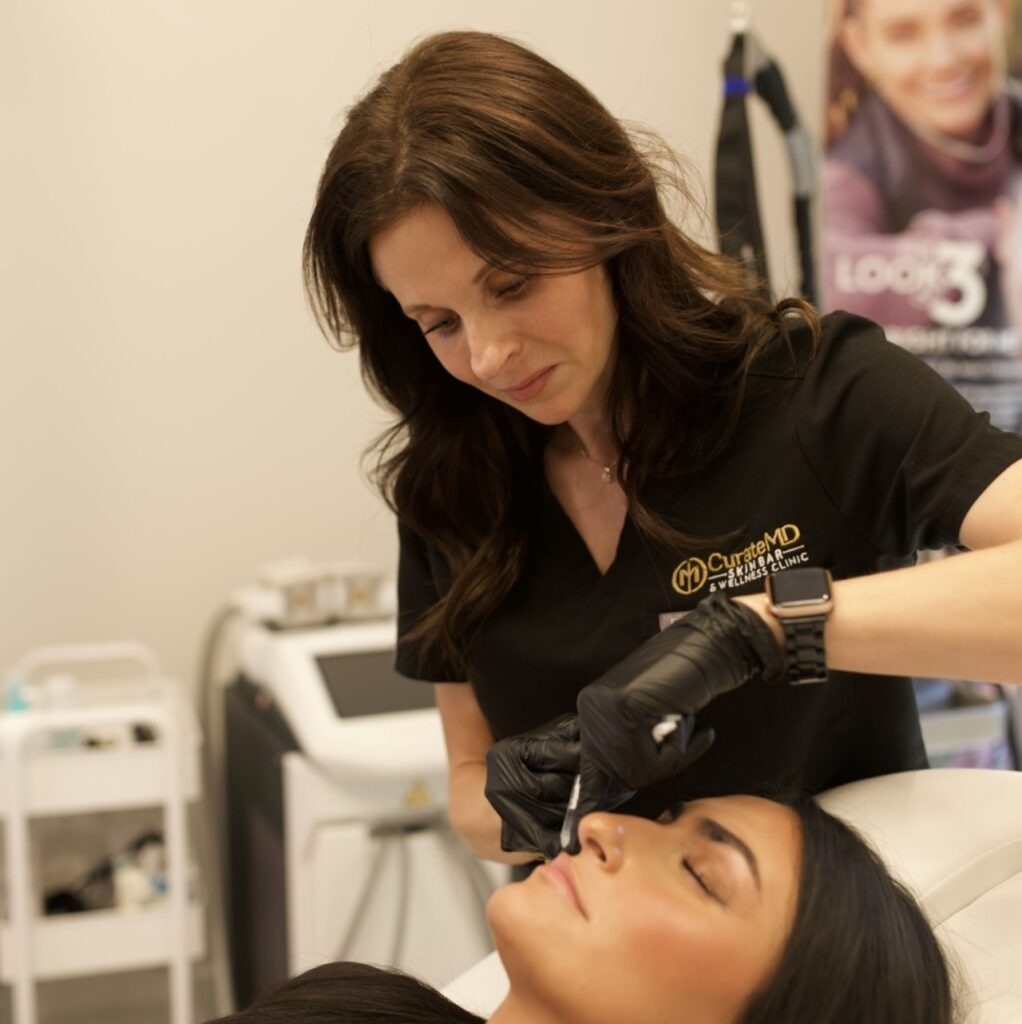
Wrinkle relaxers can soften forehead lines and frown lines without changing the features that make your face look like you. The harder part is deciding which product fits your needs.
The Botox vs. Dysport comparison often comes down to questions about onset, units, treatment areas, cost, and how natural the final result may look. Both are established injectable treatments that temporarily reduce targeted facial muscle activity, but their formulations and dosing regimens differ.
At CurateMD Skin Bar & Wellness Clinic in Chandler, AZ, treatment starts with a careful assessment of your facial movement, anatomy, previous injectable experience, and personal goals. The right choice is less about which brand is more popular and more about which treatment plan makes sense for your face.
What You’ll Learn From This Article
- How Botox and Dysport temporarily soften movement-related wrinkles
- The main differences in formulation, dosing, onset, and duration
- Why can Botox units and Dysport units not be compared directly
- Which facial areas may be treated with each injectable
- What affects treatment cost in Chandler, AZ
- How a provider selects the right product and dose for natural-looking results
- The safety points and treatment limitations to consider before booking
What Are Botox and Dysport?
Botox and Dysport are prescription injectable treatments made with different forms of botulinum toxin type A. Botox contains onabotulinumtoxinA, while Dysport contains abobotulinumtoxinA.
Both products temporarily reduce communication between targeted nerves and muscles. When selected facial muscles contract less forcefully, the overlying skin folds less deeply. This can soften dynamic wrinkles caused by repeated facial expressions.
These products are not dermal fillers. Fillers restore or add volume beneath the skin. Botox and Dysport work by temporarily reducing muscle contractions in carefully chosen treatment areas.
How Botulinum Toxin Injections Work
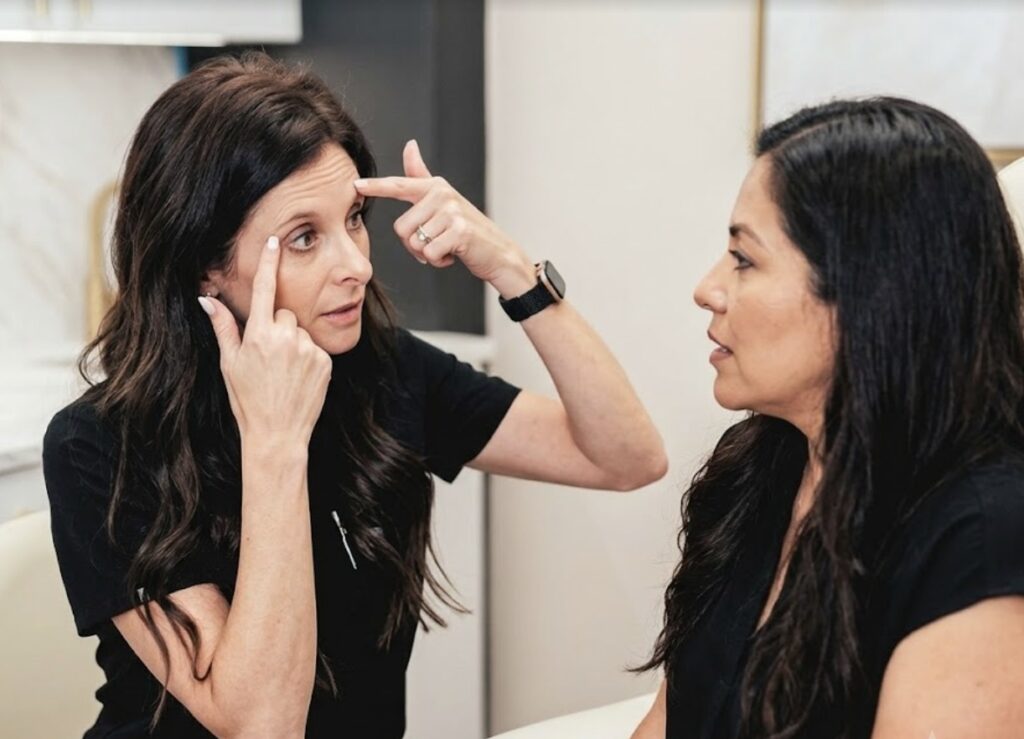
Facial muscles move when nerves release chemical signals that tell them to contract. Botulinum toxin temporarily interrupts part of that communication.
When an injector places the product into a specific muscle, the muscle receives fewer signals to contract. This can reduce movement-related wrinkles, including frown lines, forehead lines, crow’s feet, and other expression-related wrinkles.
The effect develops gradually and is temporary. Muscle activity returns as the body restores normal communication between the nerves and muscles.
What Botox and Dysport Have in Common
Botox and Dysport share several important features:
- Both are botulinum toxin type A injectables
- Both temporarily reduce targeted facial muscle movement
- Both may soften wrinkles and fine lines caused by expression
- Both require product-specific dosing
- Both can preserve natural facial expressions when used conservatively
- Both require maintenance if you want to continue the effect
These similarities explain why patients often see both products offered for the same concerns. The next step is understanding where the key differences begin.
Botox vs. Dysport: Key Differences at a Glance
The table below offers a practical comparison. It should not replace a personal assessment, but it can help clarify the basic differences between the two products.
| Comparison Point | Botox | Dysport |
| Active formulation | OnabotulinumtoxinA | AbobotulinumtoxinA |
| Product category | Botulinum toxin type A injectable | Botulinum toxin type A injectable |
| Unit system | Botox specific units | Dysport specific units |
| Are units interchangeable? | No | No |
| Initial onset | May begin within several days | May begin within several days, sometimes sooner for some patients |
| Full result assessment | Often, around 10 to 14 days | Often, around 10 to 14 days |
| Typical duration | Often, about 3 to 4 months | Often, about 3 to 4 months |
| Best choice | Depends on anatomy, dose, area, and goals | Depends on anatomy, dose, area, and goals |
A randomized comparison published in the Aesthetic Surgery Journal evaluated Botox and Dysport on opposite sides of the upper face. The researchers found no statistically significant difference in wrinkle improvement between the products during the study period. Both produced measurable improvement.
That does not mean the two injectables behave identically for every person. Individual response, treatment area, muscle strength, dose, and injector technique can all affect the final result.
The most important technical difference for patients to understand is the unit system, since that directly affects how pricing and dosing should be interpreted.
Botox and Dysport Units Are Not the Same
Botox units and Dysport units cannot be compared one-for-one. Each manufacturer measures potency using testing specific to that product.
This means one unit of Botox does not equal one unit of Dysport. A Dysport treatment usually involves a higher numerical unit count, but that does not automatically mean the treatment is stronger or more aggressive.
Why Dysport Often Uses More Units
Dysport treatments commonly require more units because Dysport has its own dosing scale. The higher number does not necessarily represent a more active product in a practical treatment comparison.
For example, a patient may see an advertisement listing a lower cost per Dysport unit and assume Dysport will cost less. That may not be true because the treatment could require more Dysport units than Botox units.
The most useful price comparison is the total recommended cost for the full treatment plan.
Why Simple Conversion Ratios Can Be Misleading
Online sources sometimes provide Botox-to-Dysport conversion formulas. These ratios can create the impression that dosing is a fixed calculation, but facial treatment is more individualized.
Your provider must consider:
- Muscle strength
- Facial symmetry
- Eyebrow position
- Treatment area
- Desired amount of movement
- Previous treatment response
- Injection depth and placement
- Product-specific dosing guidance
A review of botulinum toxin formulations explains that these products have distinct biological and manufacturing characteristics. Those differences support product-specific dosing rather than direct unit substitution.
Once the unit difference is clear, it becomes easier to understand how each product may fit different facial areas and treatment goals.
Common Treatment Areas for Botox and Dysport
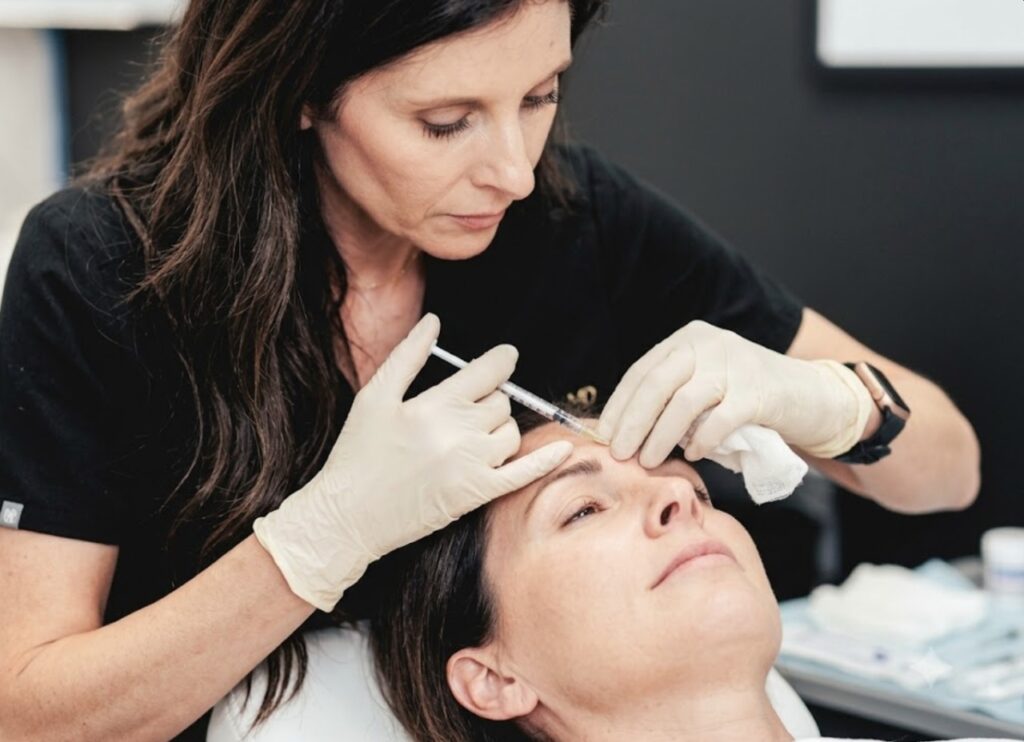
Botox and Dysport are often used to treat dynamic wrinkles, which are lines that form or deepen when facial muscles move.
Not every use is approved for every product, and some treatment areas may be considered off-label. Your provider should explain how the product will be used and why it may be appropriate for your concern.
Frown Lines Between the Eyebrows
Vertical lines between the eyebrows are known as glabellar lines. Many patients call them frown lines or “11 lines.”
These lines develop as the muscles between and above the eyebrows contract during frowning, concentration, or squinting. Botox and Dysport may temporarily reduce this movement and soften the appearance of the lines.
This area requires careful dosing because the muscles contribute to eyebrow position and facial expression.
Forehead Lines
Horizontal forehead lines form when the frontalis muscle raises the eyebrows. Treating the forehead takes more than placing injections directly beneath each visible line.
The frontalis helps support eyebrow position. Excessive dosing or poor placement may contribute to brow heaviness or a more restricted appearance than the patient intended.
For this reason, a provider usually evaluates the forehead together with the frown muscles before creating the injection pattern.
Crow’s Feet and Other Facial Areas
Wrinkle relaxers may also be considered for:
- Crow’s feet around the outer corners of the eyes
- Bunny lines across the nose
- Chin dimpling
- Vertical lip lines
- A subtle lip flip
- Jawline muscles
- Neck bands
CurateMD also offers consultation for concerns involving the forehead, frown lines, crow’s feet, lips, jawline, neck, and other areas where muscle activity affects appearance.
Each area requires a different dose, depth, and placement strategy. These details also influence how quickly results appear.
Which Works Faster, Botox or Dysport?
Dysport is often described as having a faster onset, but the difference is not predictable for every patient.
Some people notice early changes from Dysport within a few days. Others see Botox begin working during a similar period. The timing may depend on the product, dose, muscle strength, treatment area, and individual response.
In most cases, the final result should not be judged immediately.
When to Expect Initial Changes
You may begin noticing less movement within several days. One side can appear to respond sooner than the other while the treatment is still developing.
This early stage does not always represent the final level of correction.
When to Assess the Full Result
Botox and Dysport often take about 10 to 14 days to reach their full effect. Many providers wait until around the two-week point before evaluating symmetry or discussing whether an adjustment is appropriate.
Planning ahead matters if you have a wedding, reunion, vacation, professional photo session, or another major event. Scheduling treatment at least two weeks in advance gives the result time to settle.
Onset is only one part of the comparison. Most patients also want to know how the result may look and how long it may last.
Botox vs. Dysport Results and Duration
Both products can soften movement-related wrinkles while allowing you to retain expression. The result depends on how well the product, dose, and injection pattern fit your facial anatomy.
A natural-looking result does not require removing all movement. In many cases, the goal is to reduce the force of muscle contractions while keeping the face relaxed and familiar.
What Results May Look Like

A carefully planned treatment may:
- Soften forehead lines during expression
- Reduce the depth of frown lines
- Make crow’s feet less noticeable
- Create a more rested appearance
- Preserve natural facial movement
- Reduce repeated folding of the skin
Deep static wrinkles, which remain visible when the face is at rest, may soften but may not disappear completely. These lines may also reflect collagen loss, sun damage, changes in skin texture, or volume loss.
How Long Botox and Dysport Typically Last
Results from Botox and Dysport often last about 3 to 4 months. Some people notice movement returning sooner, while others may experience a longer effect.
Duration can vary based on:
- Product-specific dose
- Treatment area
- Muscle strength
- Metabolism
- Previous treatment history
- Individual response
- Frequency of strong facial movement
The effect usually fades gradually. Muscle activity returns over time, followed by the return of dynamic lines.
Your wrinkles do not suddenly become worse when the product wears off. They generally revert to their untreated appearance.
Since both products often have a similar maintenance window, cost becomes another practical factor in the decision.
Botox vs. Dysport Cost in Chandler, AZ
The cost of Botox or Dysport in Chandler depends on the treatment plan, not only the advertised price per unit.
Since each product uses a different unit system, comparing one Botox unit with one Dysport unit does not provide an accurate picture of the total expense.
What Affects the Total Cost
Your treatment cost may depend on:
- The number of treatment areas
- Muscle strength
- The number of product-specific units
- The amount of movement you want to preserve
- The complexity of the injection pattern
- Previous response to treatment
- Current clinic pricing or membership options
A patient with strong frown muscles may require a different dose than someone with lighter muscle activity. Treating several areas will also cost more than treating one small area.
Why the Lowest Unit Price May Not Offer the Best Value
Price matters, but it should not be separated from the quality of safety, assessment, and treatment.
The value of an appointment includes:
- A review of your medical history
- Facial movement assessment
- Product selection
- Accurate dosing
- Careful injection placement
- Clear aftercare instructions
- Follow up guidance when appropriate
A personalized quote after consultation is more useful than an online calculator or promotional unit price.
Cost may influence your choice, but the provider’s treatment plan has a greater effect on whether the result looks subtle and balanced.
Which Is Better for natural-looking results?
Neither Botox nor Dysport automatically creates a more natural result. Technique, dose, placement, and communication matter more than the brand name alone.
Natural-looking results depend on:
- Facial anatomy
- Muscle balance
- Brow position
- Injection depth
- Product-specific dose
- Areas where movement should be preserved
- Previous treatment response
- Your preferences
Botox may suit someone who has used it successfully before or whose provider prefers its characteristics for a specific treatment area.
Dysport may suit someone who has responded well to it previously or whose provider believes the formulation fits the treatment goal.
Some people describe Dysport as better for treating larger areas and Botox as more precise. Those descriptions are too simple. Product movement can also be affected by dose, dilution, injection volume, depth, anatomy, and injector technique.
The more useful question is: Which product and dose can support your goals while respecting your natural facial movement?
Before deciding, it is also important to understand the potential side effects and the limits of what wrinkle relaxers can correct.
Safety, Side Effects, and Treatment Limitations
Botox and Dysport are prescription medications. A qualified healthcare provider should perform the injections after reviewing your medical history and treatment goals.
Most reactions are temporary, but no injectable treatment is risk-free.
Common Temporary Reactions
Possible effects near the injection site include:
- Redness
- Swelling
- Tenderness
- Bruising
- Small injection marks
- Headache
- Temporary tightness or heaviness
Technique-related effects may include uneven movement, brow heaviness, eyelid drooping, or changes in facial expression. These risks make facial assessment and precise placement important.
When Treatment May Not Be Appropriate
Tell your provider about your medications, supplements, medical conditions, any previous reactions to injections, and current health concerns.
Treatment may need to be delayed or avoided if you:
- Have an active infection in the proposed treatment area
- Have had a serious reaction to a botulinum toxin product
- Have certain neuromuscular conditions
- Are pregnant or breastfeeding
- Take medications that may affect treatment safety
Do not stop prescribed medications without speaking with the clinician who manages them.
Seek immediate medical care if you develop difficulty breathing, swallowing, or speaking after treatment.
What Botox and Dysport Cannot Correct
Wrinkle relaxers primarily address lines caused by muscle movement. They may not fully improve:
- Significant skin laxity
- Facial volume loss
- Deep folds
- Uneven texture
- Pigmentation
- Sun damage
- Facial hollows
A different treatment may be more appropriate when the concern comes from skin quality or volume loss. CurateMD may discussdermal fillers, Sculptra, DiamondGlow, chemical peels, RF microneedling, CO2 laser treatments, or medical-grade skin care based on your needs.
These limitations are one reason CurateMD begins with a consultation rather than assuming every visible line needs the same injectable.
How CurateMD Chooses Between Botox and Dysport
At CurateMD Skin Bar & Wellness Clinic, product selection starts with understanding your face, your medical history, and what you want the treatment to accomplish.
The goal is not to treat every visible line or use a standard number of units. The goal is to create a realistic plan that fits your anatomy and comfort level.
What Your Provider May Evaluate
Your consultation may include a review of:
- Medical history
- Medications and supplements
- Previous Botox or Dysport treatments
- Facial movement at rest and during expression
- Forehead and eyebrow position
- Muscle strength
- Facial symmetry
- Areas where you want to maintain movement
- Budget and maintenance preferences
- Upcoming events
Your provider may recommend Botox, Dysport, a conservative first treatment, or another service if muscle movement is not the main cause of your concern.
A Broader View of Skin and Wellness
CurateMD offers injectables, skin treatments, laser services, weight management, hormone therapy, IV therapy, and vitamin B12 support in one Chandler clinic.
This allows the team to look at your concern in context. Fine lines may relate to facial movement, but skin texture, collagen loss, volume changes, lifestyle, or overall wellness may also affect how refreshed you feel.
The result is a plan based on your priorities, not a standard package.
With that information in hand, the final choice between Botox and Dysport becomes more straightforward.
Botox or Dysport: How to Choose
Botox may be worth considering if:
- You have responded well to it before
- You prefer a familiar product
- Your treatment plan fits Botox-specific dosing
- Your provider recommends it for the selected area
Dysport may be worth considering if:
- You have had a good response to it previously
- You want to discuss its possible onset characteristics
- Your provider believes it suits the treatment area
- Your plan fits Dysport’s specific dosing
Either product may be appropriate when:
- You are medically eligible
- The dose is personalized
- The injection pattern reflects your anatomy
- Your expectations are realistic
- You understand the potential risks
- You want a subtle improvement rather than a complete loss of movement
The best choice is not based on popularity or unit price alone. It comes from matching the product, dose, and placement to your facial muscles and treatment goals.
The questions below address several concerns that patients commonly bring to a wrinkle-relaxer consultation.
Frequently Asked Questions About Botox vs. Dysport
1. Is Dysport stronger than Botox?
Not necessarily. Botox and Dysport use different unit systems, so a higher number of Dysport units does not necessarily indicate a stronger treatment. The dose must be interpreted according to the specific product.
2. Does Dysport work faster than Botox?
Dysport may begin working sooner for some patients, but the onset varies by individual. Both products can take about 10 to 14 days to reach their full effect.
3. Which lasts longer in the Botox vs. Dysport comparison?
Both often last about 3 to 4 months. Duration depends on the treatment area, dose, muscle strength, metabolism, previous treatment history, and individual response.
4. Is Botox or Dysport better for forehead lines?
Either product may be appropriate. Forehead treatment requires careful evaluation because the forehead muscle helps raise the eyebrows. Product selection, dose, and placement should reflect your brow position and the desired amount of movement.
5. How much does Botox vs. Dysport cost in Chandler, AZ?
The total cost depends on the product, number of treatment areas, muscle strength, recommended units, and treatment goals. Since Botox and Dysport units differ, compare the full treatment price rather than the cost per unit.
Ready to Choose Between Botox and Dysport? Schedule Your Consultation
Botox and Dysport work in similar ways, but their formulations and dosing systems differ. Both may soften frown lines, forehead lines, crow’s feet, and other dynamic wrinkles. Neither product is automatically more effective, more natural-looking, or more affordable for every patient.
A thoughtful consultation can help you understand which option fits your anatomy, previous response, budget, and long-term goals.
Schedule a consultation with CurateMD Skin Bar & Wellness Clinic in Chandler, AZ, to discuss Botox vs. Dysport. Our team can assess your facial movement, answer your questions, and create a personalized plan focused on safe care, clear expectations, and results that still look like you.

